

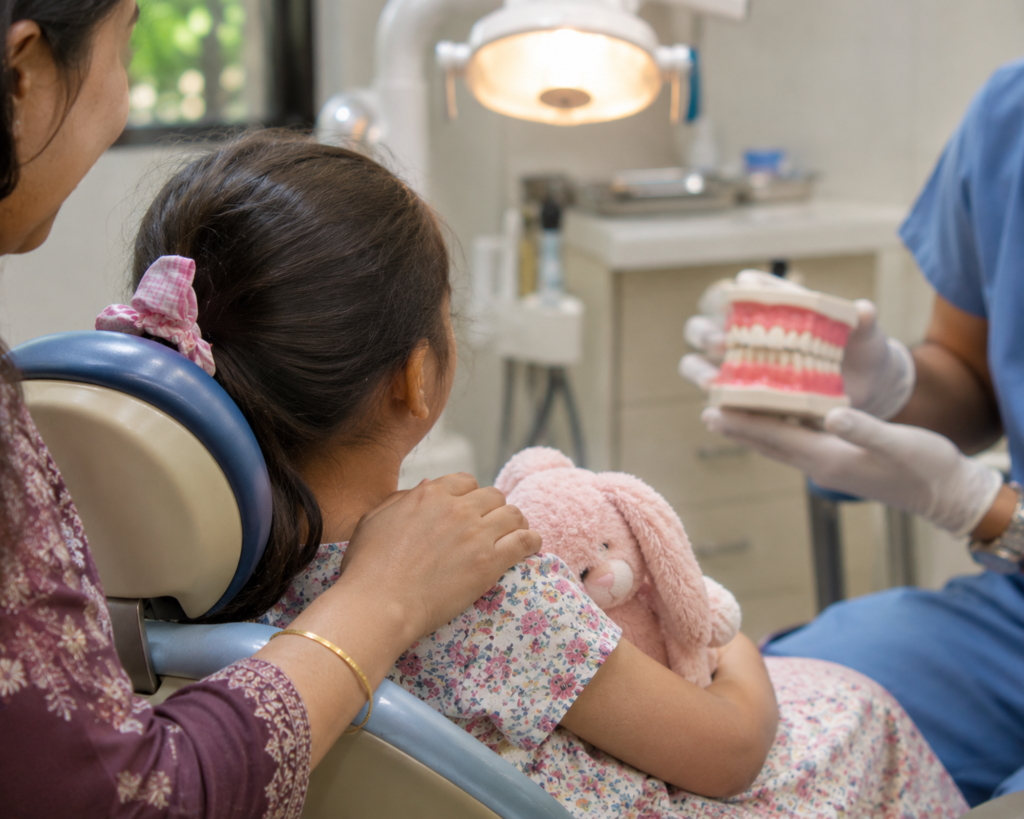
Thumb-sucking is a natural comfort habit in babies and toddlers, and for most children it causes no lasting harm. The question for parents is when thumb-sucking starts to affect the teeth, and what to do about it.
When it is normal
Sucking a thumb or fingers is common in the early years and most children stop on their own between the ages of two and four. At this stage there is usually nothing to worry about.
When it can affect the teeth
If the habit continues strongly once the permanent front teeth start coming through, it can push the teeth or affect how the upper and lower teeth meet. Vigorous, long-term sucking is more likely to cause changes than a gentle, occasional habit.
Helping your child stop
- Use gentle encouragement and praise, not scolding
- Notice the triggers, often tiredness or stress, and offer comfort another way
- Involve older children in the decision to stop
- Ask your dentist for support if the habit persists
Related reading
Worried about your child’s thumb-sucking? Call or WhatsApp +91 79900 49733, or book through our contact page.
Sparkling Smiles Dental Clinic is at HG/9, SNS Platina, Someshwara Enclave, Vesu, Surat, Gujarat 395007. Call or WhatsApp +91 79900 49733.
Frequently asked questions
Is thumb-sucking bad for my child's teeth?
For most young children it causes no lasting harm and they stop on their own. It matters more if a strong habit continues once the permanent front teeth come through.
When do children usually stop thumb-sucking?
Most stop on their own between two and four years of age.
How can I help my child stop?
Gentle encouragement and praise, addressing triggers like tiredness, and support from your dentist if it persists.