

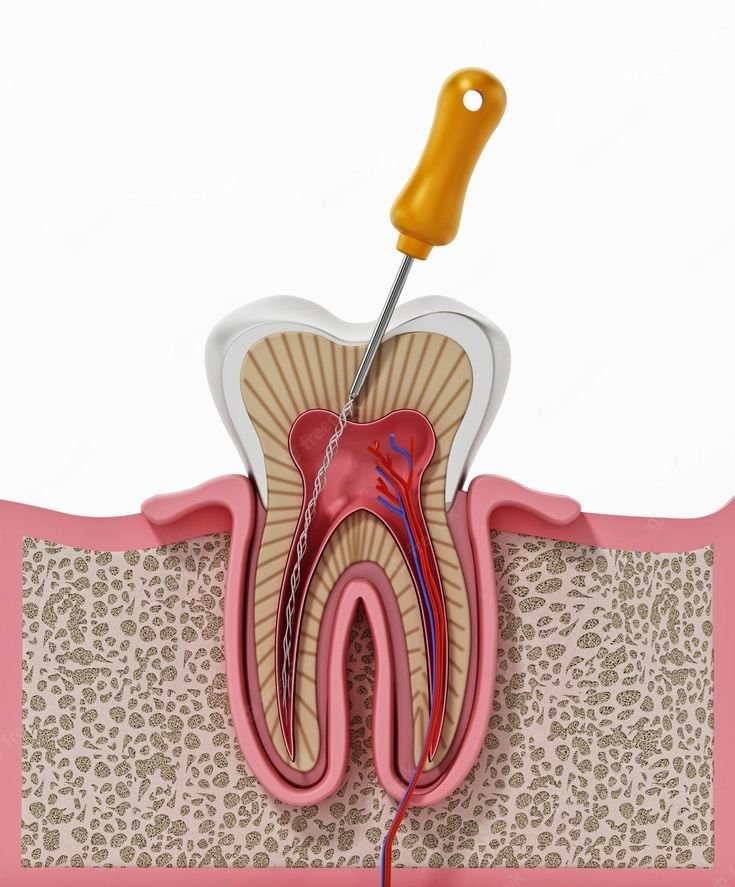
Few dental words cause as much worry as “root canal.” Many people imagine a long, painful procedure, but with modern dental methods and local anesthesia, most patients find the experience more manageable than they expected. Root canal treatment is a common procedure used to relieve tooth pain and try to save a tooth that would otherwise need to be removed. This guide explains it in plain language so you know what to expect.
What Is Root Canal Treatment?
Inside every tooth is a soft center called the pulp. It contains nerves and blood vessels. When deep decay, a crack, or an injury lets bacteria reach the pulp, it can become infected or inflamed. This may cause pain, swelling, and sensitivity, and the infection can spread to the surrounding bone if left untreated.
Root canal treatment (often called RCT) is a dental procedure used to treat an infected or damaged tooth. The infected pulp is removed, the root canals are cleaned and disinfected, and the tooth is sealed to help prevent further infection.
Signs You May Need a Root Canal
Only a dentist can confirm the cause of your pain, but these symptoms are worth taking seriously:
- A toothache that is severe, throbbing, or keeps you awake at night
- Lingering sensitivity to hot or cold drinks
- Pain when chewing or pressing on the tooth
- Swollen or tender gums near the tooth
- A tooth that has darkened in color
- A small pimple-like bump on the gum
If you are searching for tooth pain treatment in Surat, do not wait for the pain to go away on its own. A toothache that suddenly stops can sometimes mean the nerve has died, and the infection may still be present.
What Happens During the Procedure?
Here is a simple step by step picture of a typical root canal treatment. Your own treatment may differ depending on your tooth.
- Examination and X-ray. Your dentist checks the tooth and takes an X-ray to see the shape of the roots and the extent of the infection.
- Numbing. Local anesthesia is given to numb the area.
- Cleaning the tooth. A small opening is made, and the infected pulp is removed.
- Disinfecting the canals. The root canals are carefully cleaned and shaped.
- Sealing. The canals are filled and sealed to help stop bacteria from returning.
- Restoration. The tooth is restored with a filling or a crown.
Is a Root Canal Painful?
This is the most common question. The treatment is intended to relieve pain, not cause it. Because the area is numbed, most patients feel pressure rather than pain, though experiences vary from person to person. Mild soreness for a few days afterward is common and can usually be managed with medication your dentist recommends. Many people search for painless root canal treatment, and it is worth discussing comfort and anesthesia with your dentist before you begin.
Single Sitting Root Canal Treatment
Traditionally, a root canal needed two or more visits. Single sitting root canal treatment allows the procedure to be completed in one appointment when it is clinically suitable. This may reduce the number of visits, which can help if you have a busy schedule. Not every tooth is suitable for one visit. For example, a severe infection may need more time, so your dentist will advise what is best for your case.
Why Try to Save the Natural Tooth?
Removing a tooth may seem like a simple fix, but a natural tooth is hard to replace. Saving it through a root canal may help you:
- Keep your original tooth
- Continue chewing comfortably
- Help stop infection from spreading
- Avoid the extra cost and time of replacing a missing tooth, such as with a dental implant
Whether a tooth can be saved depends on how much healthy tooth structure remains, and only an examination can tell.
What Happens After a Root Canal?
A tooth that has had a root canal can become more fragile, especially a back tooth that handles heavy chewing. That is why many dentists recommend a dental crown after the procedure to protect the tooth from cracking. Good care also matters: brush twice a day, floss daily, and visit your dentist for regular check-ups. How long a treated tooth lasts depends on your oral hygiene, the condition of the tooth, and the quality of the restoration.
How Much Does a Root Canal Cost?
Many patients search for root canal cost in India before booking. The price varies depending on which tooth is treated, how complex the infection is, the materials and equipment used, and whether a crown is needed afterward. Because every case is different, online figures are only a rough guide. The most reliable way to know the root canal treatment cost in Surat is to get your tooth examined and ask for a written estimate before starting.
How to Choose the Right Dentist
If you are looking for a root canal specialist in Surat, check these points:
- Qualifications and registration: Ask about the dentist’s qualifications and registration with the dental council, and about their training in endodontics (root canal treatment).
- Clear explanation: A good dentist explains your diagnosis, options, and possible risks in simple words.
- Hygiene: Look for a clean clinic that follows proper sterilisation practices.
- Convenience: A nearby root canal clinic makes follow-up visits easier.
About the Clinic
Sparkling Smiles by Meeta Choksi is a dental clinic located at UG/9, SNS Platina, Vesu, Surat. Services listed on its website include root canal treatment, dental implants, braces, clear aligners, smile design, teeth whitening, dental veneers, kids dentistry, and dental crowns. Phone: +91 79900 49733.
Final Thoughts
If you have a toothache or any of the signs above, seeing a dentist early often keeps treatment simpler. Results and recovery vary from person to person, so ask questions, understand your options, and take the decision at your own pace.